A caldera carved by eruption and time
Sailing these waters reveals how geology, mythology, migration, and daily life have intertwined on Santorini for thousands of years.
Table of Contents
From ancient island to volcanic crescent
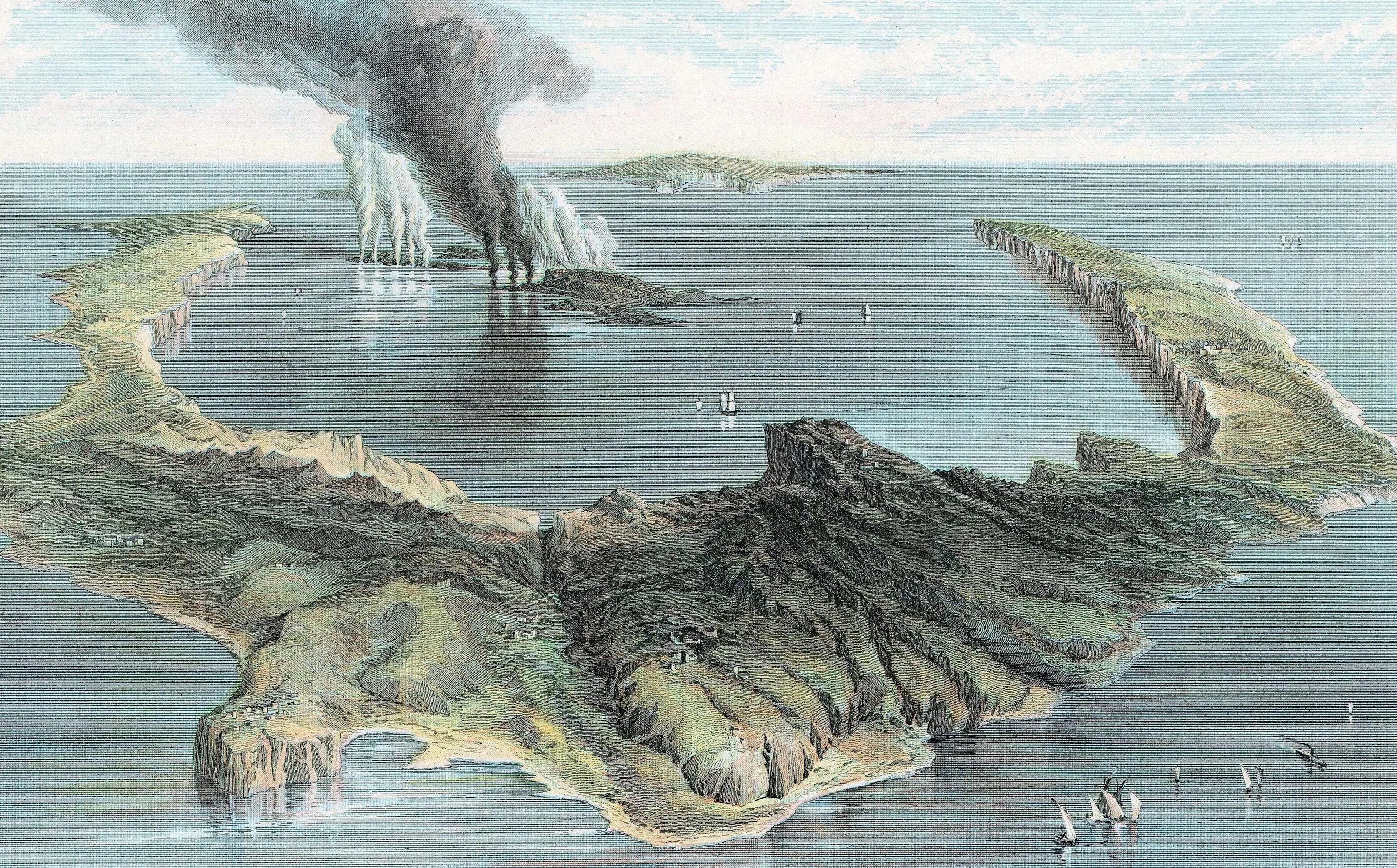
Before Santorini became the iconic postcard of white villages and blue domes, it was a larger, rounded island known in antiquity as Thera. Life developed on fertile volcanic soils, trade routes linked the island to Crete and the eastern Mediterranean, and communities adapted to a landscape that was beautiful but geologically restless. Long before modern tourism, sailors and farmers already understood that the island gave generously yet demanded respect.
Then came one of the most powerful volcanic eruptions in human history, usually dated to the late Bronze Age. The central part of the island collapsed, sea water rushed into the emptied magma chamber, and the caldera was born. What visitors admire today from boat decks and cliff paths is therefore not a quiet bay, but the rim of a transformed volcano. In Santorini, scenery is not just scenery: it is frozen evidence of a planetary-scale event that changed local life and possibly influenced stories far beyond the Aegean.
Akrotiri and the Bronze Age world
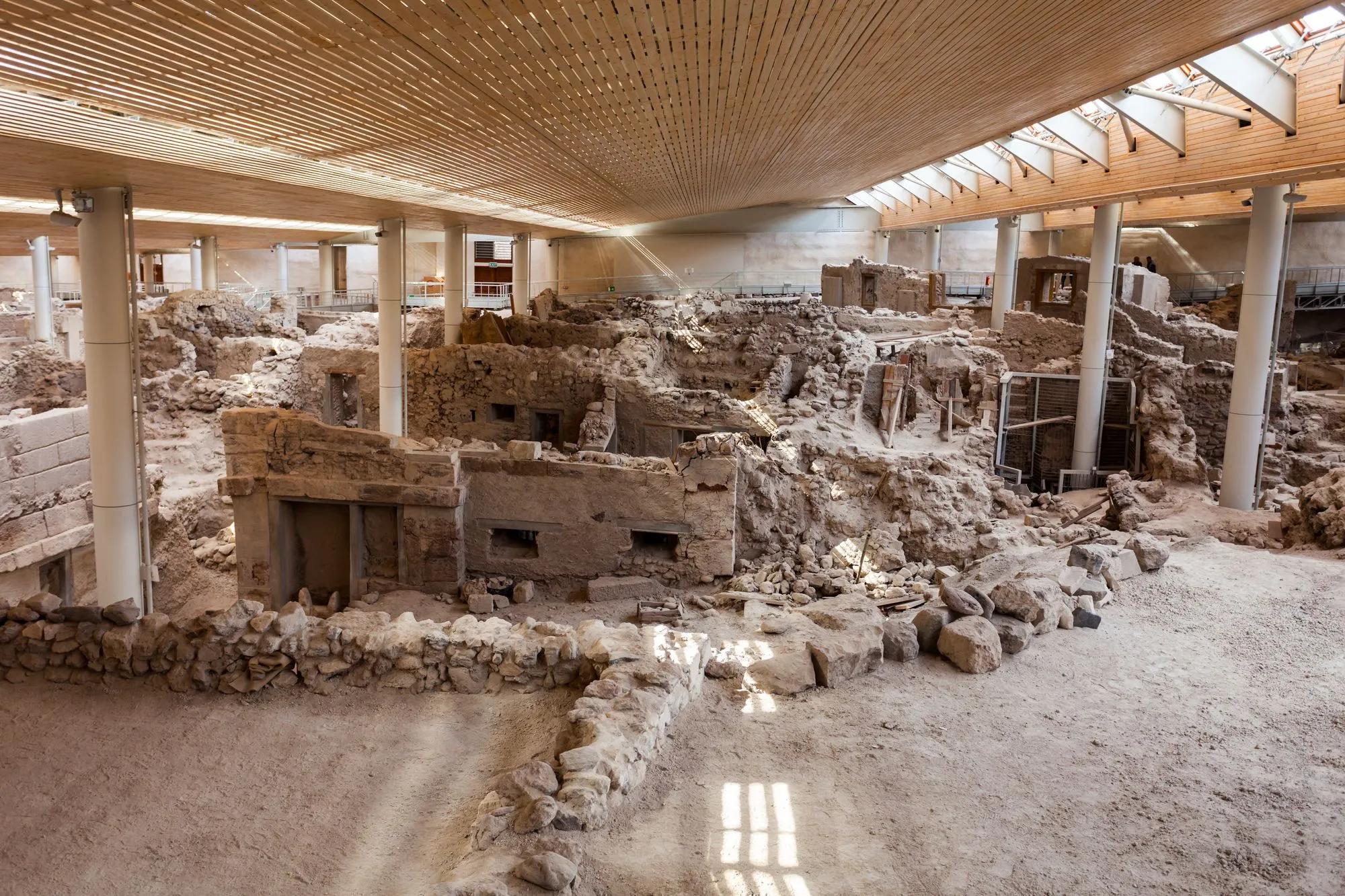
On the southern side of Santorini lies Akrotiri, an extraordinary archaeological site often compared to Pompeii, though it predates it by many centuries. This Bronze Age settlement reveals multi-story buildings, drainage systems, storage jars, and vivid frescoes that depict nature, ceremony, and maritime life. The sophistication of the settlement shows that Santorini was not a remote outpost, but an active participant in a connected Aegean civilization.
For modern visitors, Akrotiri offers an emotional bridge between past and present. You can stand among preserved walls and imagine merchants, artisans, and families moving through sunlit courtyards long before modern roads, ferries, and airports existed. Many caldera cruise guests choose to pair a sea tour with an archaeological visit, because together they tell a complete narrative: the human story of settlement and exchange, and the geological story of destruction, adaptation, and renewal.
Eruption, ash and global echoes
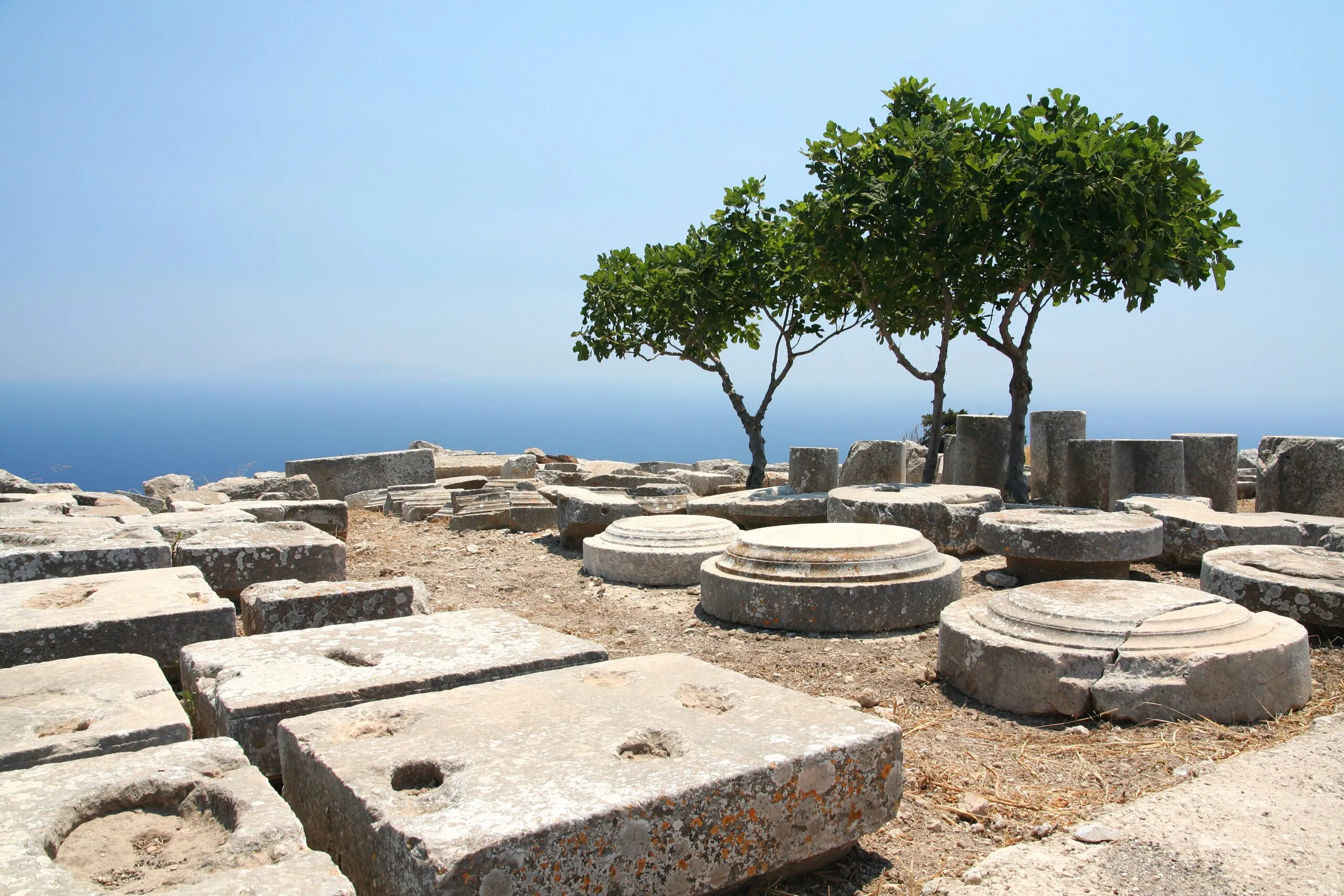
The great eruption of Thera scattered ash across the eastern Mediterranean and triggered profound regional consequences. Scientists continue to refine dates and impacts, but the event is widely recognized as a turning point in Aegean prehistory. Ash fall, tsunamis, and atmospheric disturbance likely affected trade, agriculture, and coastal settlements far beyond Santorini itself.
Because the eruption was so dramatic, it has inspired centuries of speculation, including links to legends such as Atlantis. Whether those connections are literal or symbolic, the deeper truth remains compelling: Santorini preserves a rare dialogue between myth and evidence. As your boat passes layered cliffs of black, red, and ochre stone, you are effectively reading a geological archive where each visible band marks an ancient chapter of fire, collapse, and recovery.
The caldera as a maritime crossroads

After the eruption era, Santorini continued to live by the sea. Its position in the Cyclades kept it connected to shipping lanes, and generations of islanders worked as sailors, traders, fishermen, and shipbuilders. Even today, maritime know-how remains part of local identity, visible in boat craftsmanship, navigation culture, and the practical rhythm of port life.
A caldera cruise quietly reflects this heritage. You are not only taking photos of dramatic cliffs; you are following corridors that carried goods, stories, languages, and livelihoods for centuries. The sea around Santorini has always been both pathway and provider, and modern tourism is simply the latest chapter in a much older maritime tradition.
Villages on the rim: Fira, Imerovigli and Oia

The villages that crown the caldera rim seem almost theatrical from the water, but their placement was historically practical as well as beautiful. Elevated positions offered broad visibility over sea approaches, cooler breezes in summer, and strategic distance from rough winter swells. Over time, architecture adapted to both climate and topography, producing cave houses, narrow passages, and white facades that reflect sunlight.
From the deck of a boat, these settlements appear as layered ribbons of homes, chapels, terraces, and pathways suspended above dark volcanic rock. That contrast between delicate white architecture and raw geology is one reason Santorini feels so visually powerful. It is also why many travelers say the sea view of the villages is their most memorable perspective of the island.
Faith, festivals and island traditions

Beyond famous sunsets, Santorini has a rich social calendar shaped by Orthodox traditions, local feast days, and village gatherings. Church festivals, processions, and summer celebrations continue to bring communities together across generations, often centered around shared meals, music, and seasonal rituals.
Visitors who look beyond the postcard highlights often discover a warmer, more layered island culture: family-run tavernas, local crafts, stories tied to specific chapels, and customs that continue quietly even in busy tourist months. A cruise can be a beautiful introduction, but the deeper character of Santorini emerges when sea views are paired with attentive, respectful time on land.
Nea Kameni, Palea Kameni and living geology
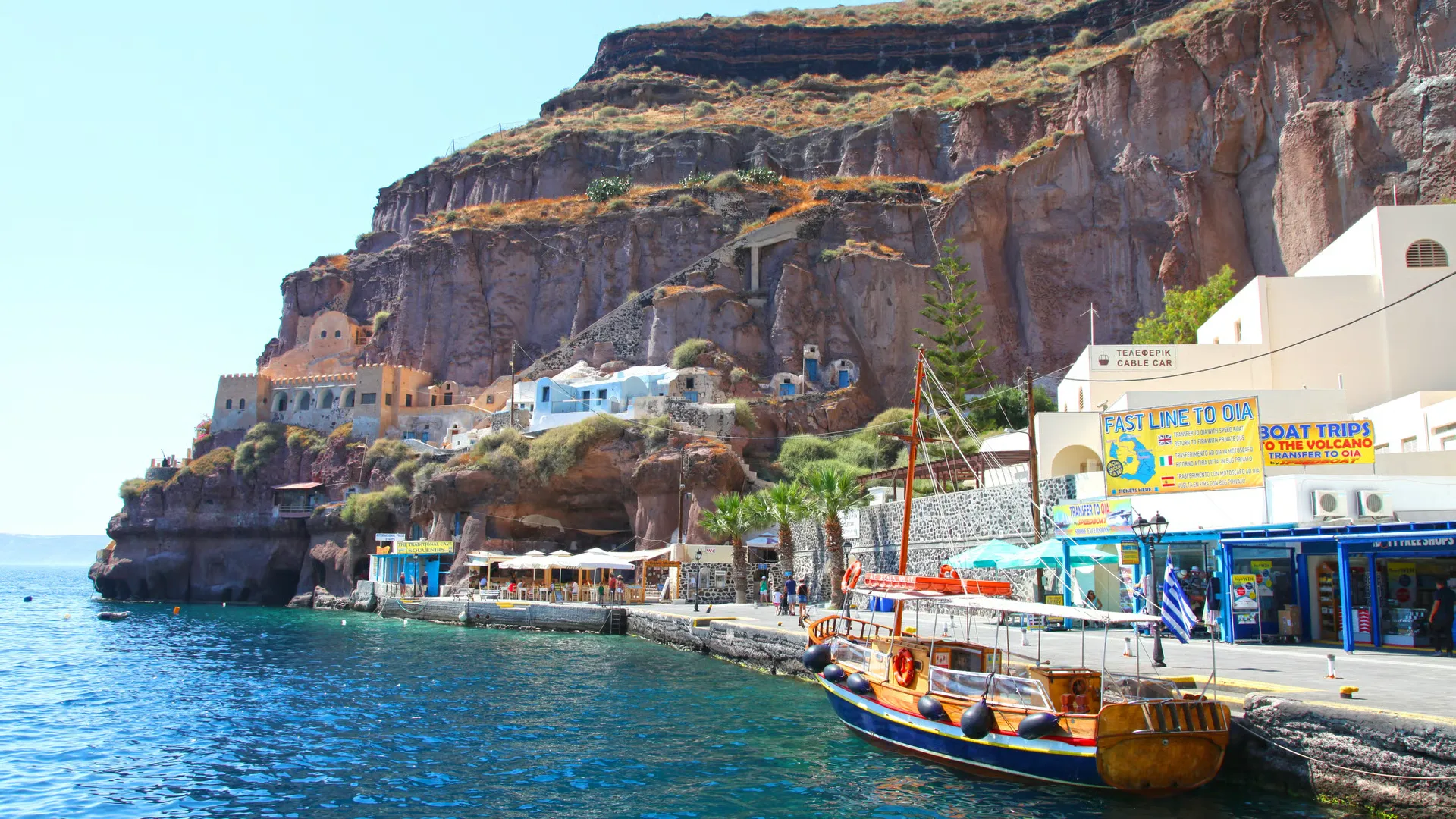
The volcanic islets in the middle of the caldera are reminders that Santorini's geological story is ongoing. Nea Kameni formed through relatively recent volcanic activity, and its dark lava fields still look young compared with the older cliffs around the rim. Walking there can feel like stepping onto another planet, especially under strong summer light.
Nearby Palea Kameni is known for its thermal waters, where minerals and volcanic heat influence temperature and color. While these spots are often described simply as swim stops, they are also living classrooms in earth science. The calm beauty of the caldera can make it easy to forget that this landscape was forged by extreme forces and continues to evolve over time.
Sailing, safety and practical realities

Santorini cruises are generally smooth and well organized, but sea travel always depends on weather and operational logistics. Wind direction can change route order, swell can affect comfort at certain stops, and port regulations may require adjusted boarding procedures. Experienced crews are used to these shifts and prioritize passenger safety.
Good preparation makes a major difference. Arrive early, wear suitable footwear, keep essentials in a compact bag, and listen closely to timing instructions before each stop. A little planning reduces stress and leaves you free to enjoy what matters most: the volcanic panorama, the sea breeze, and the unhurried rhythm of island sailing.
Cuisine, vineyards and volcanic soil
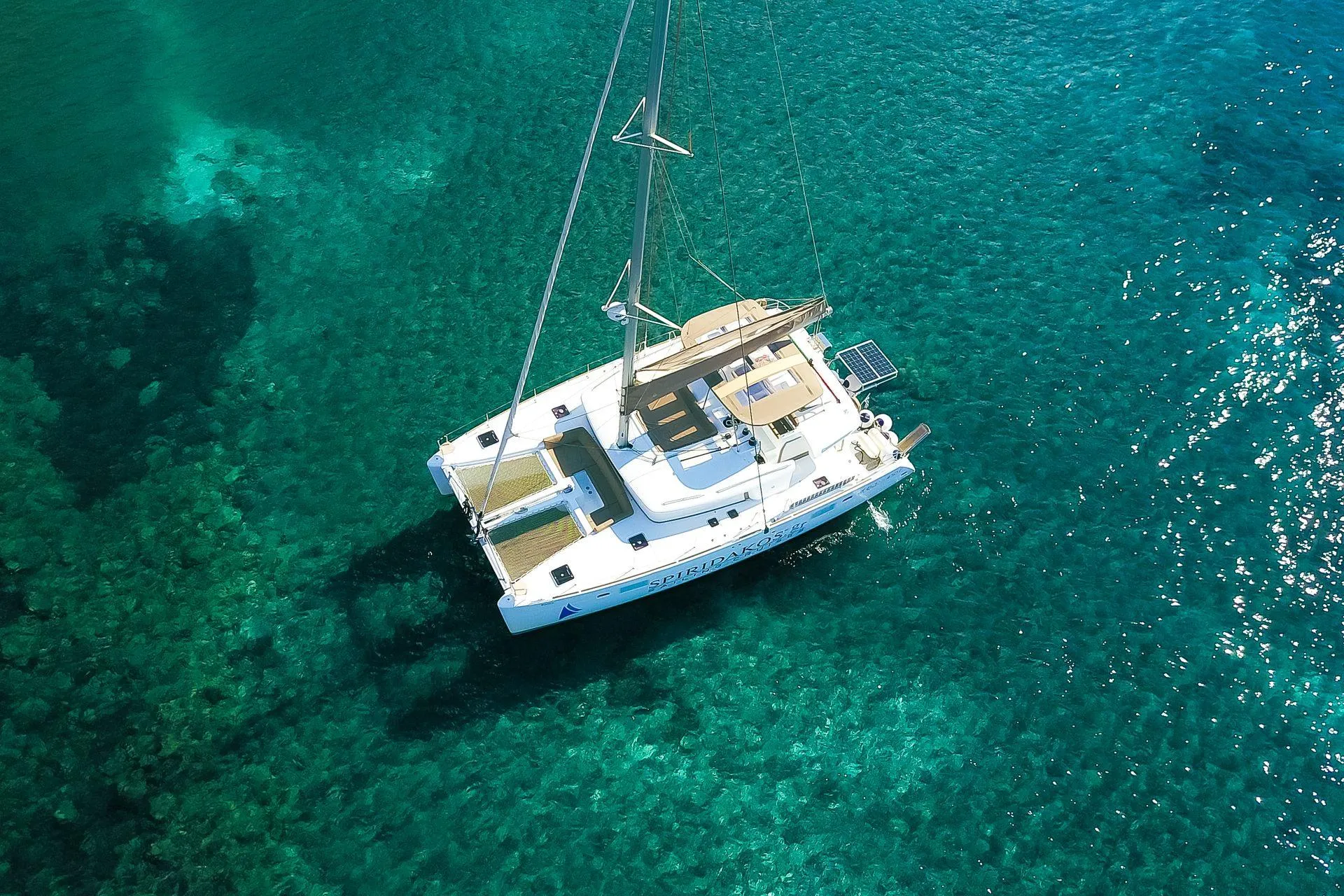
Santorini's food culture reflects both scarcity and creativity. Volcanic soil, low rainfall, and persistent winds pushed farmers toward resilient crops and ingenious methods. The island became known for products such as cherry tomatoes, fava, capers, and distinctive Assyrtiko wines, each carrying a flavor profile shaped by mineral-rich terrain.
Many cruises now include meals or tasting elements, giving travelers a chance to pair caldera views with local ingredients. This connection between landscape and cuisine is one of Santorini's quiet surprises: the same geology that formed dramatic cliffs also influences what arrives on the plate and in the glass.
Tickets, cruise types and smart planning
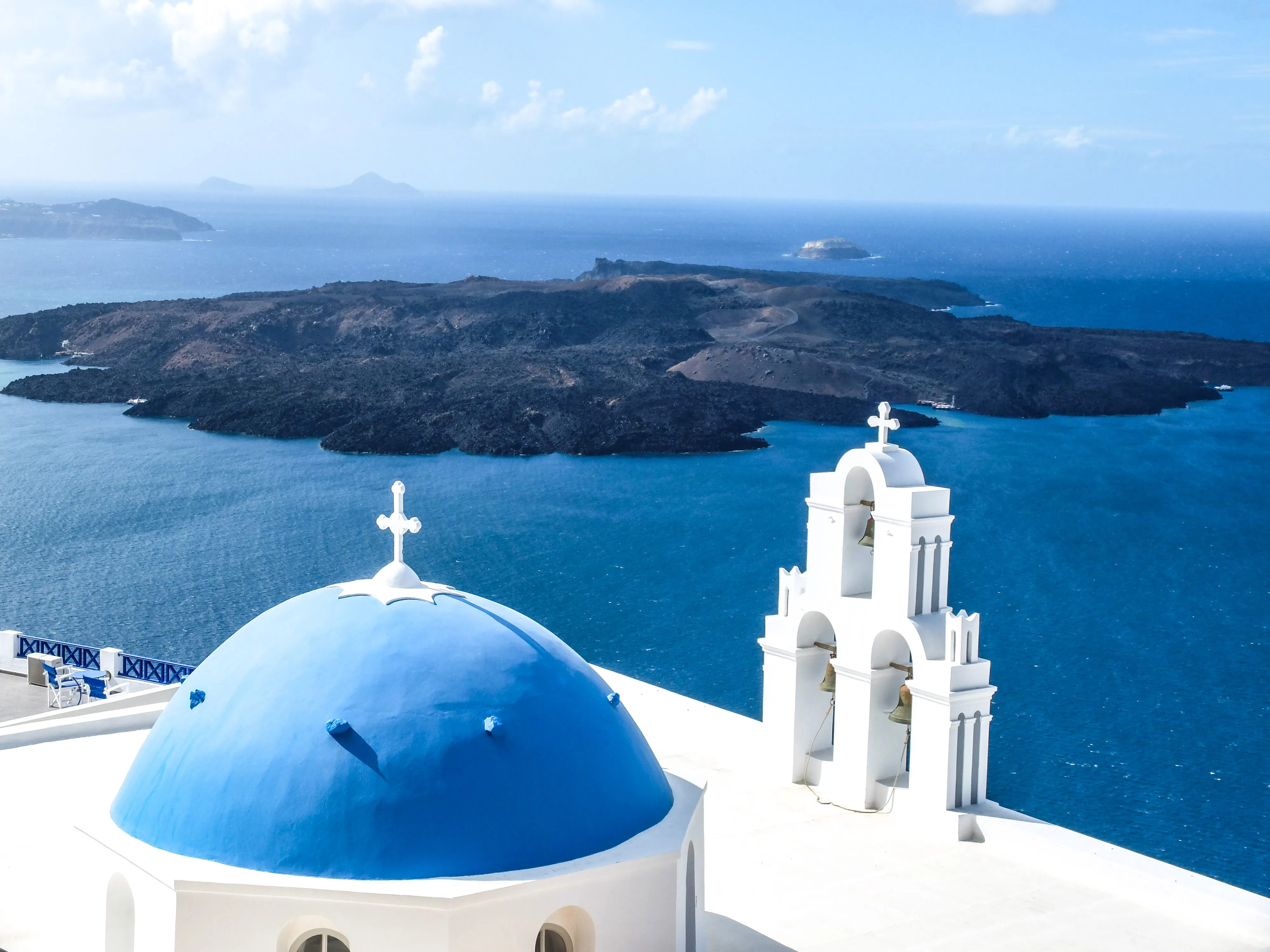
Santorini cruise options range from classic shared volcano boats to premium catamarans and fully private charters. Shared tours usually offer strong value and structured highlights, while smaller premium vessels focus on comfort, service quality, and a slower pace at each stop. Private charters provide full flexibility for couples, families, or special occasions.
A smart booking strategy starts with your priorities: Do you want volcano hiking, easy swimming, food onboard, a romantic sunset atmosphere, or the privacy to shape your own route? Once that is clear, compare inclusions carefully, especially transfer coverage, meal quality, group size, and cancellation terms. A thoughtful choice turns a good day on the water into an exceptional one.
Preservation and responsible tourism
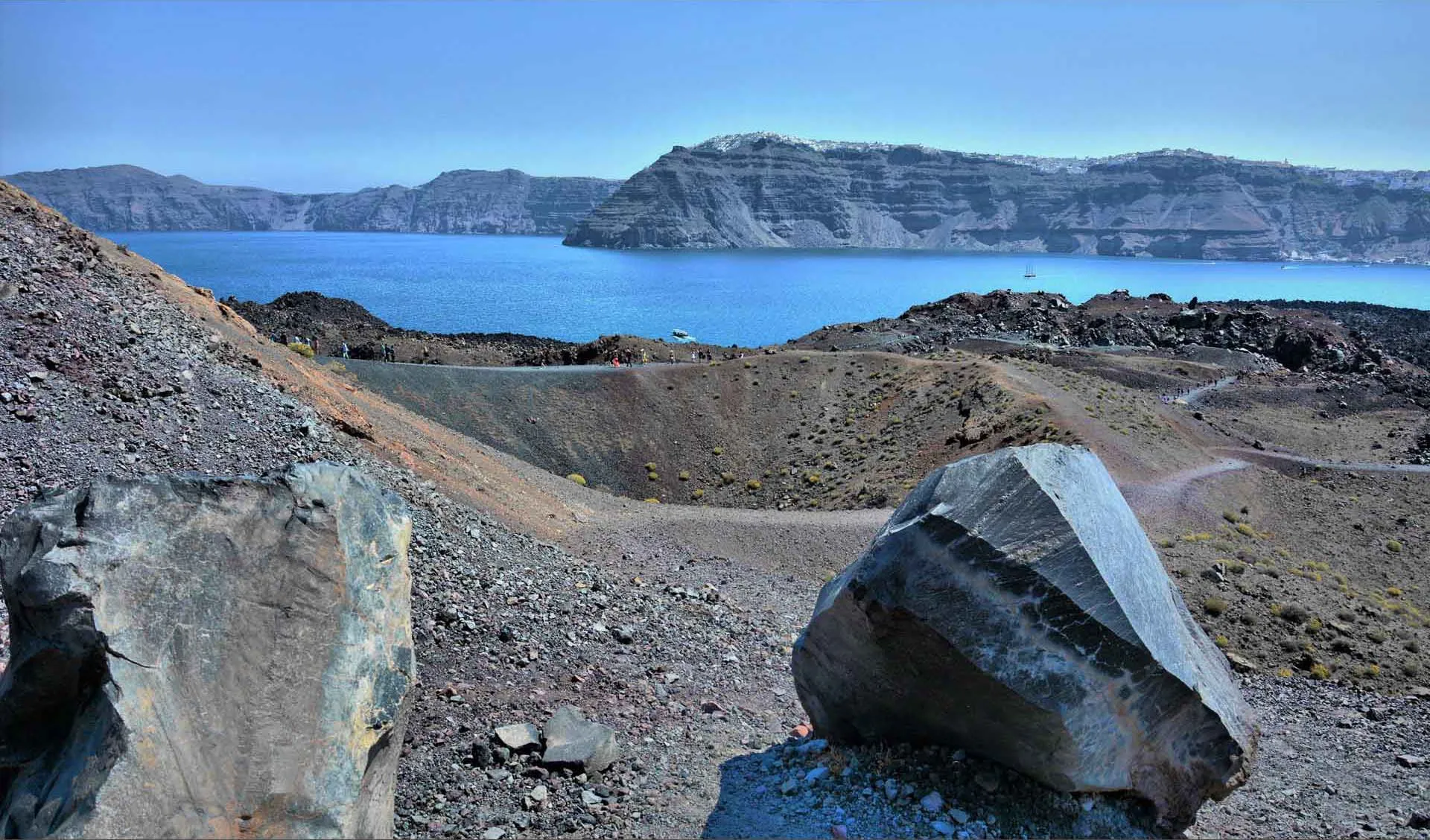
Santorini's beauty is finite, and responsible travel matters. Coastal ecosystems, archaeological zones, and small village infrastructures can all be strained by overtourism if visitor behavior is careless. Choosing licensed operators, following waste rules, and respecting designated swim and mooring zones helps protect the caldera environment.
Responsible choices also support local communities. When travelers book ethical providers, respect quiet residential areas, and spend thoughtfully in local businesses, tourism becomes a partnership rather than a burden. Preserving Santorini's character is not only a policy goal; it is a shared responsibility between residents, operators, and visitors.
Hidden bays, side stops and sunset routes
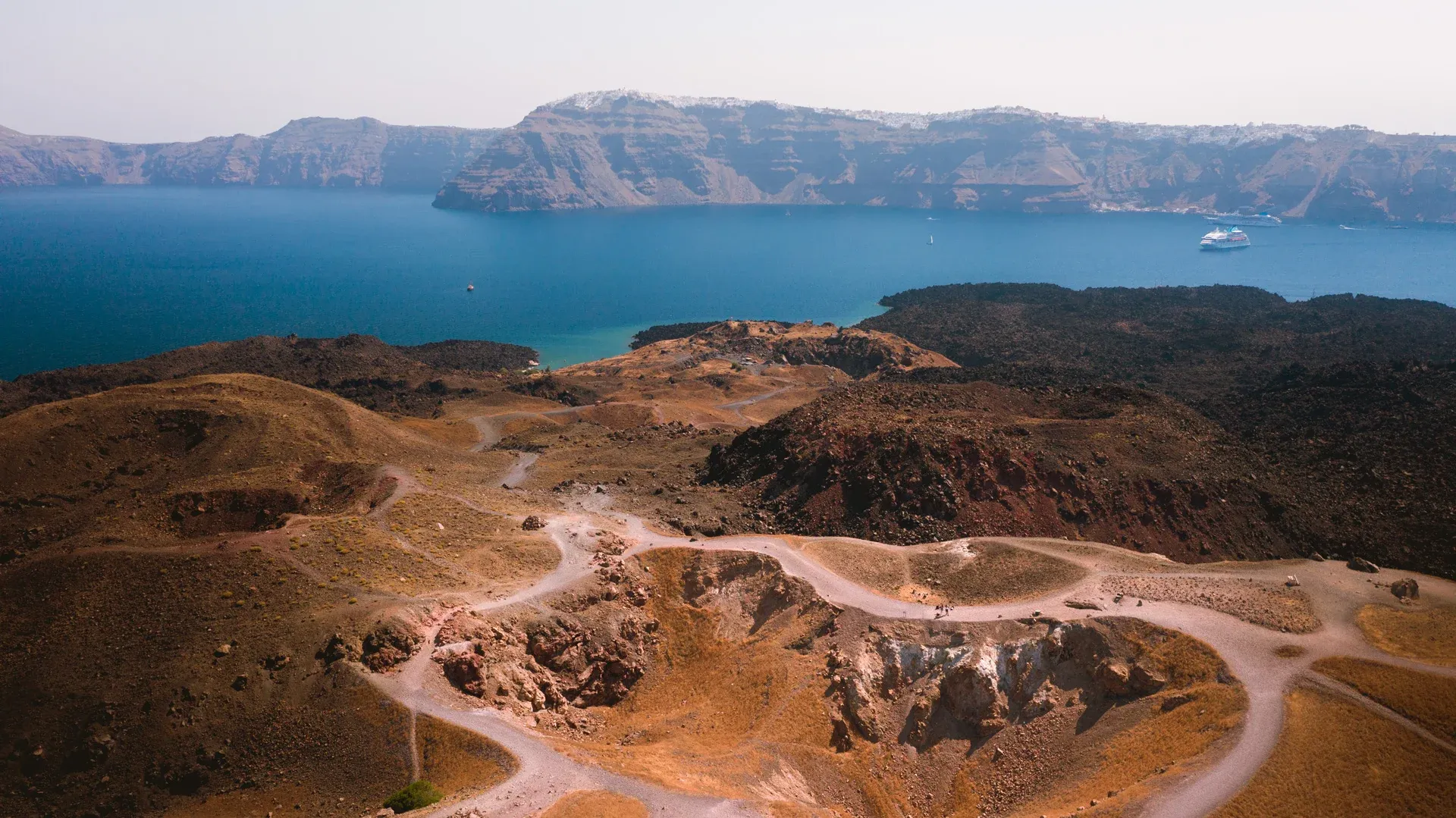
While famous landmarks deserve their reputation, some of Santorini's most intimate moments happen in quieter coves where the water is calm and the cliffs feel close enough to touch. Depending on sea conditions and itinerary design, cruises may pause near less crowded swimming areas that deliver a more personal, relaxed experience.
Sunset routes add a final emotional layer to the day. As the light softens, the island's colors shift dramatically and even familiar viewpoints feel renewed. For many travelers, this final chapter is what lingers longest: not only the spectacle of the sunset itself, but the feeling of watching the island settle into evening from the middle of the caldera.
Why a caldera cruise tells Santorini's true story

On paper, a caldera cruise is simply a leisure activity. In practice, it is one of the clearest ways to understand Santorini as a living intersection of geology, history, architecture, and everyday island life. From the water, the island's layers become legible: lava, cliff, village, chapel, path, harbor, and horizon.
By the end of the journey, most visitors realize they have experienced more than a scenic boat ride. They have followed ancient volcanic contours, sailed routes shaped by centuries of maritime culture, and watched modern island life unfold above them on the rim. That combination of scale and intimacy is rare, and it is exactly why a day at sea often becomes the defining memory of Santorini.
Table of Contents
From ancient island to volcanic crescent
Before Santorini became the iconic postcard of white villages and blue domes, it was a larger, rounded island known in antiquity as Thera. Life developed on fertile volcanic soils, trade routes linked the island to Crete and the eastern Mediterranean, and communities adapted to a landscape that was beautiful but geologically restless. Long before modern tourism, sailors and farmers already understood that the island gave generously yet demanded respect.
Then came one of the most powerful volcanic eruptions in human history, usually dated to the late Bronze Age. The central part of the island collapsed, sea water rushed into the emptied magma chamber, and the caldera was born. What visitors admire today from boat decks and cliff paths is therefore not a quiet bay, but the rim of a transformed volcano. In Santorini, scenery is not just scenery: it is frozen evidence of a planetary-scale event that changed local life and possibly influenced stories far beyond the Aegean.
Akrotiri and the Bronze Age world
On the southern side of Santorini lies Akrotiri, an extraordinary archaeological site often compared to Pompeii, though it predates it by many centuries. This Bronze Age settlement reveals multi-story buildings, drainage systems, storage jars, and vivid frescoes that depict nature, ceremony, and maritime life. The sophistication of the settlement shows that Santorini was not a remote outpost, but an active participant in a connected Aegean civilization.
For modern visitors, Akrotiri offers an emotional bridge between past and present. You can stand among preserved walls and imagine merchants, artisans, and families moving through sunlit courtyards long before modern roads, ferries, and airports existed. Many caldera cruise guests choose to pair a sea tour with an archaeological visit, because together they tell a complete narrative: the human story of settlement and exchange, and the geological story of destruction, adaptation, and renewal.
Eruption, ash and global echoes
The great eruption of Thera scattered ash across the eastern Mediterranean and triggered profound regional consequences. Scientists continue to refine dates and impacts, but the event is widely recognized as a turning point in Aegean prehistory. Ash fall, tsunamis, and atmospheric disturbance likely affected trade, agriculture, and coastal settlements far beyond Santorini itself.
Because the eruption was so dramatic, it has inspired centuries of speculation, including links to legends such as Atlantis. Whether those connections are literal or symbolic, the deeper truth remains compelling: Santorini preserves a rare dialogue between myth and evidence. As your boat passes layered cliffs of black, red, and ochre stone, you are effectively reading a geological archive where each visible band marks an ancient chapter of fire, collapse, and recovery.
The caldera as a maritime crossroads
After the eruption era, Santorini continued to live by the sea. Its position in the Cyclades kept it connected to shipping lanes, and generations of islanders worked as sailors, traders, fishermen, and shipbuilders. Even today, maritime know-how remains part of local identity, visible in boat craftsmanship, navigation culture, and the practical rhythm of port life.
A caldera cruise quietly reflects this heritage. You are not only taking photos of dramatic cliffs; you are following corridors that carried goods, stories, languages, and livelihoods for centuries. The sea around Santorini has always been both pathway and provider, and modern tourism is simply the latest chapter in a much older maritime tradition.
Villages on the rim: Fira, Imerovigli and Oia
The villages that crown the caldera rim seem almost theatrical from the water, but their placement was historically practical as well as beautiful. Elevated positions offered broad visibility over sea approaches, cooler breezes in summer, and strategic distance from rough winter swells. Over time, architecture adapted to both climate and topography, producing cave houses, narrow passages, and white facades that reflect sunlight.
From the deck of a boat, these settlements appear as layered ribbons of homes, chapels, terraces, and pathways suspended above dark volcanic rock. That contrast between delicate white architecture and raw geology is one reason Santorini feels so visually powerful. It is also why many travelers say the sea view of the villages is their most memorable perspective of the island.
Faith, festivals and island traditions
Beyond famous sunsets, Santorini has a rich social calendar shaped by Orthodox traditions, local feast days, and village gatherings. Church festivals, processions, and summer celebrations continue to bring communities together across generations, often centered around shared meals, music, and seasonal rituals.
Visitors who look beyond the postcard highlights often discover a warmer, more layered island culture: family-run tavernas, local crafts, stories tied to specific chapels, and customs that continue quietly even in busy tourist months. A cruise can be a beautiful introduction, but the deeper character of Santorini emerges when sea views are paired with attentive, respectful time on land.
Nea Kameni, Palea Kameni and living geology
The volcanic islets in the middle of the caldera are reminders that Santorini's geological story is ongoing. Nea Kameni formed through relatively recent volcanic activity, and its dark lava fields still look young compared with the older cliffs around the rim. Walking there can feel like stepping onto another planet, especially under strong summer light.
Nearby Palea Kameni is known for its thermal waters, where minerals and volcanic heat influence temperature and color. While these spots are often described simply as swim stops, they are also living classrooms in earth science. The calm beauty of the caldera can make it easy to forget that this landscape was forged by extreme forces and continues to evolve over time.
Sailing, safety and practical realities
Santorini cruises are generally smooth and well organized, but sea travel always depends on weather and operational logistics. Wind direction can change route order, swell can affect comfort at certain stops, and port regulations may require adjusted boarding procedures. Experienced crews are used to these shifts and prioritize passenger safety.
Good preparation makes a major difference. Arrive early, wear suitable footwear, keep essentials in a compact bag, and listen closely to timing instructions before each stop. A little planning reduces stress and leaves you free to enjoy what matters most: the volcanic panorama, the sea breeze, and the unhurried rhythm of island sailing.
Cuisine, vineyards and volcanic soil
Santorini's food culture reflects both scarcity and creativity. Volcanic soil, low rainfall, and persistent winds pushed farmers toward resilient crops and ingenious methods. The island became known for products such as cherry tomatoes, fava, capers, and distinctive Assyrtiko wines, each carrying a flavor profile shaped by mineral-rich terrain.
Many cruises now include meals or tasting elements, giving travelers a chance to pair caldera views with local ingredients. This connection between landscape and cuisine is one of Santorini's quiet surprises: the same geology that formed dramatic cliffs also influences what arrives on the plate and in the glass.
Tickets, cruise types and smart planning
Santorini cruise options range from classic shared volcano boats to premium catamarans and fully private charters. Shared tours usually offer strong value and structured highlights, while smaller premium vessels focus on comfort, service quality, and a slower pace at each stop. Private charters provide full flexibility for couples, families, or special occasions.
A smart booking strategy starts with your priorities: Do you want volcano hiking, easy swimming, food onboard, a romantic sunset atmosphere, or the privacy to shape your own route? Once that is clear, compare inclusions carefully, especially transfer coverage, meal quality, group size, and cancellation terms. A thoughtful choice turns a good day on the water into an exceptional one.
Preservation and responsible tourism
Santorini's beauty is finite, and responsible travel matters. Coastal ecosystems, archaeological zones, and small village infrastructures can all be strained by overtourism if visitor behavior is careless. Choosing licensed operators, following waste rules, and respecting designated swim and mooring zones helps protect the caldera environment.
Responsible choices also support local communities. When travelers book ethical providers, respect quiet residential areas, and spend thoughtfully in local businesses, tourism becomes a partnership rather than a burden. Preserving Santorini's character is not only a policy goal; it is a shared responsibility between residents, operators, and visitors.
Hidden bays, side stops and sunset routes
While famous landmarks deserve their reputation, some of Santorini's most intimate moments happen in quieter coves where the water is calm and the cliffs feel close enough to touch. Depending on sea conditions and itinerary design, cruises may pause near less crowded swimming areas that deliver a more personal, relaxed experience.
Sunset routes add a final emotional layer to the day. As the light softens, the island's colors shift dramatically and even familiar viewpoints feel renewed. For many travelers, this final chapter is what lingers longest: not only the spectacle of the sunset itself, but the feeling of watching the island settle into evening from the middle of the caldera.
Why a caldera cruise tells Santorini's true story
On paper, a caldera cruise is simply a leisure activity. In practice, it is one of the clearest ways to understand Santorini as a living intersection of geology, history, architecture, and everyday island life. From the water, the island's layers become legible: lava, cliff, village, chapel, path, harbor, and horizon.
By the end of the journey, most visitors realize they have experienced more than a scenic boat ride. They have followed ancient volcanic contours, sailed routes shaped by centuries of maritime culture, and watched modern island life unfold above them on the rim. That combination of scale and intimacy is rare, and it is exactly why a day at sea often becomes the defining memory of Santorini.